
HIV TREATMENT ADHERENCE AND HIV PREVENTION DURING THE UKRAINE HUMANITARIAN CRISIS























Closing Gaps in HIV Treatment Adherence and HIV Prevention during the Ukraine Humanitarian Crisis 2.0
For the past three decades, HealthRight International has been working to expand access to quality healthcare services and the protection of human rights for vulnerable populations in 30 countries around the world. We operate across four priority program areas: RMNCAH (Reproductive, Maternal, Newborn, Child, and Adolescent Health); HIV; violence; and mental health. HealthRight International provides technical and organizational support to build capacity, enabling local authorities, community organizations, and private clinics to sustainably deliver services to the most vulnerable groups. We actively collaborate with other non-governmental organizations, ministries, and partners to test and scale up innovative approaches and technologies that address persistent and emerging challenges in global health and human rights
BACKGROUND
Russia’s invasion of Ukraine on February 24, 2022, triggered a large-scale humanitarian crisis. With
the massive displacement of people within Ukraine and beyond, it has become critically important
for host communities and countries to be adequately prepared to maintain high standards of HIV
prevention, treatment, and care. The ongoing war has exacerbated the HIV epidemic in Ukraine,
leading to disruptions in prevention, treatment, and care services. Prior to the war, the HIV
prevalence rate was 1.0% [0.8–1.3] among the general population, with approximately 150,000
people living with HIV (PLHIV) and around 120,000 receiving antiretroviral therapy (WHO). Since
the start of the full-scale invasion, 30% of PLHIV have faced treatment interruptions due to
displacement and the destruction of healthcare infrastructure (USAID)
The project’s target regions include Kyiv, Poltava, Poltava Oblast, Dnipro, Dnipropetrovsk Oblast,
Mykolaiv, and Mykolaiv Oblast. As of January 2025, Dnipropetrovsk Oblast hosts about 520,000
internally displaced persons (IDPs), making it one of the regions with the highest number of IDPs
in the country. Mykolaiv has a population of approximately 495,000, of which about 300,000 are
local residents and 195,000 are IDPs. Poltava hosts around 171,000 IDPs, and Kyiv approximately
364,000 (IOM), many of whom lack consistent access to HIV-related services. The ongoing conflict
has disrupted HIV monitoring and healthcare delivery. Vulnerable populations, including sex
workers and people who inject drugs, are disproportionately affected
PROJECT SUMMARY
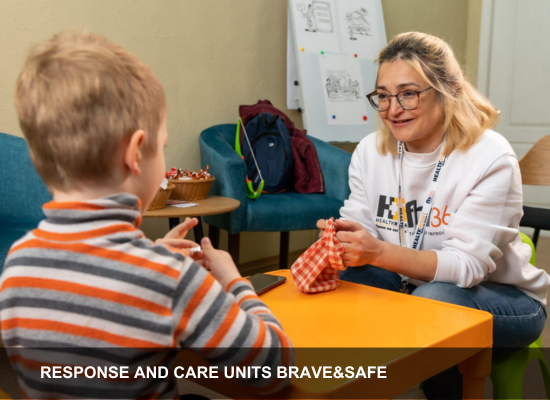
Project goal: to scale up successful, evidence-based models of care for people living with HIV (PLHIV) and key populations (KPs) by integrating HIV services into psychosocial support packages. The project will promote the inclusion of these services in the operations of Resilience Centers (Kyiv, Mykolaiv), Multidisciplinary (outreach) Teams (Poltava, Dnipro), and Halfway Houses (Poltava, Dnipro), as well as in state and community centers, humanitarian structures, and civil society organizations. Special emphasis will be placed on addressing the needs of those affected by the protracted conflict to improve their access to care and strengthen their health
The project aims to achieve the following objectives
Objective 1: Ensure the scale-up of successful, evidence-based models of care for people living with HIV (PLHIV) and key populations (KPs) by integrating HIV services into psychosocial support packages
Objective 2: Document the integration of HIV services into psychosocial support and humanitarian aid packages offered by state and community centers, humanitarian organizations, and civil society organizations, and disseminate successful models and other strategic information to stakeholders to promote replication at the national and local levels
Objective 3: Strengthen community-led support systems by sharing HealthRight’s knowledge and evidence-based care models for PLHIV and KPs, and by establishing partnerships and referral systems with local institutions and civil society organizations (CSOs)
The activities of the project - aimed at supporting the following population groups:
Women at risk of HIV or living with HIV
- Women who use drugs (WWUD);
- Women engaged in sex work;
- Female partners of people who inject drugs (PWID)
- Women living with HIV (WLHIV)
- emale partners of people living with HIV (PLHIV)
- Internally displaced women (IDPs);
- Survivors of gender-based or sexual violence
- Female partners of veterans
Men:
- People who inject drugs (PWID)
- Men living with HIV
- Veterans
PROJECT SUMMARY
New service users reached with EJAF project services:
Resilience center in Kyiv: 495
Resilience center in Mykolaiv: 451
Multidisciplinary mobile team (Poltava): 501
Multidisciplinary mobile team (Dnipro): 501
Halfway House in Poltava: 23
Halfway House in Dnipro: 26
Humanitarian services received by EJAF project beneficiares
Resilience center in Kyiv: 1499
Resilience center in Mykolaiv: 1426
Multidisciplinary mobile team (Poltava): 1463
Multidisciplinary mobile team (Dnipro): 1425
Halfway House in Poltava: 63
Halfway House in Dnipro: 72
FOR MORE INFORMATION
For further information about the project or if you are interested in partnership, please contact Olha Luchynska, Project Coordinator
To support, please subscribe
Telegram: TakeCareUA_bot https://t.me/TakeCareUA_bot
Web page www.healthright.org.ua
Facebook: https://www.facebook.com/HealthRightUkraine/
Instagram: linktr.ee/HealthRight_Ukraine
YouTube: https://www.youtube.com/@healthrightukraine132
This project is implemented by HealthRight International in Ukraine with support from the Elton John AIDS Foundation.
Період реалізації проєкту: червень 2025 – травень 2026 року.
CONTACTS
For further information about the project, please contact the Project Coordinator:
Olha Luchynska
olha.luchynska@healthright.org
Kyiv, Anna Akhmatova St., 31
тел.: 099 349 1089
Інформація про проєкт
- Project duration червень 2025 – травень 2026 року
- Donor Elton John AIDS Foundation
- Coordinator Olha Luchynska

